
The Art of Seamless Wood Edgebanding Finishes
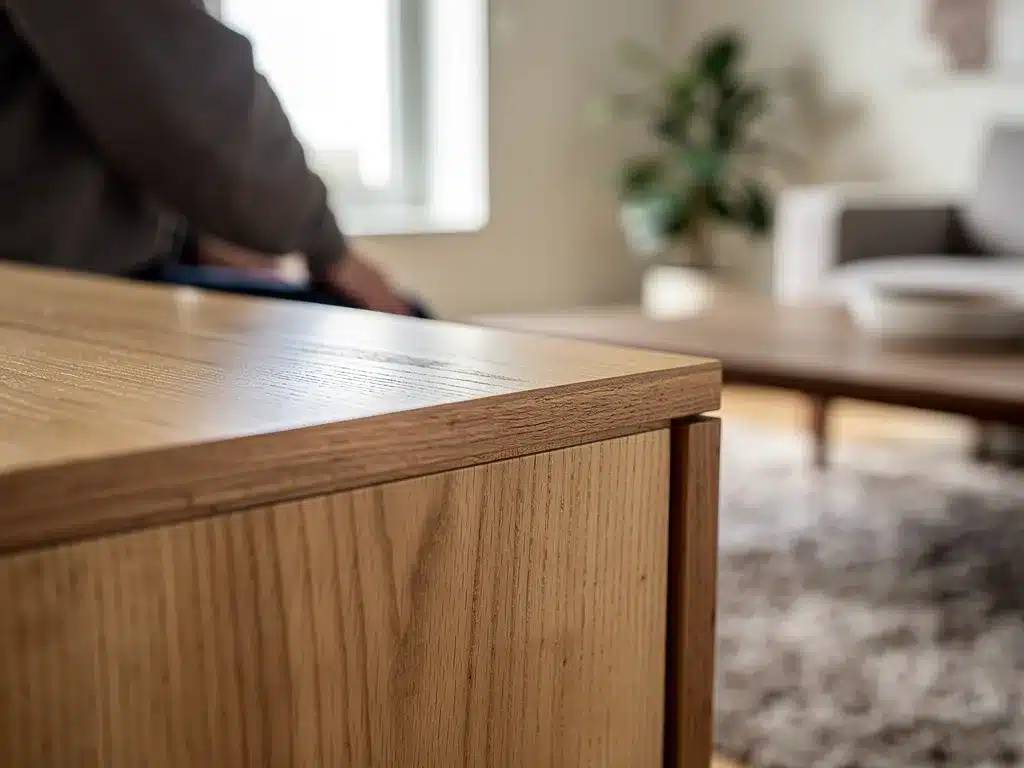
Achieving a seamless finish with natural wood edgebanding requires matching species, grain, and color between the veneer and the panel face. Trumatch offers architectural-grade wood veneer edgebanding in thicknesses from 0.4 mm to 3 mm, allowing fabricators to sand and finish the joint for an invisible transition.
Why does a natural wood edgebanding finish matter?
A natural edgebanding finish transforms raw panel edges into a seamless, professional surface. Real wood edgeband products protect exposed substrate from moisture and physical damage while delivering an authentic wood appearance. Without proper edge treatment, panel cores absorb humidity and swell over time. The result is delamination and costly callbacks.
Wood edgebanding serves two critical functions simultaneously. First, the material shields vulnerable panel edges from impact and environmental exposure. Second, it creates visual continuity across the entire component. A Chabros publication from October 2024 notes that edgebanding provides the perfect solution for covering raw wood panel edges, giving them a smooth and cohesive appearance. This dual role makes edge selection a structural decision, not merely a cosmetic one.
What makes real wood edgeband different from synthetic alternatives?
Real wood edgeband carries the same grain character and light-reflecting properties as the face veneer. Synthetic options approximate color but lack depth. When a cabinet door opens under gallery lighting, the difference becomes immediately visible. The edge either blends in or announces itself as plastic.
How does edgebanding protect against moisture damage?
Panel products absorb moisture fastest through cut edges. Trumatch International Inc. confirms that edgebanding protects exposed edges from damage and moisture. A continuous real wood edgeband seals that entry point. In high-humidity environments like powder rooms and kitchens, this barrier prevents core swelling that ruins panel flatness.
Trumatch International Inc. has supplied architectural-grade wood products for over 20 years. The company’s edgebanding guide details material options and application methods for achieving durable, invisible edge transitions. Fabricators who treat edgebanding as an afterthought risk finish failure. Those who specify it early produce work that holds up under daily use and close inspection.
What makes real wood edgeband different from PVC?
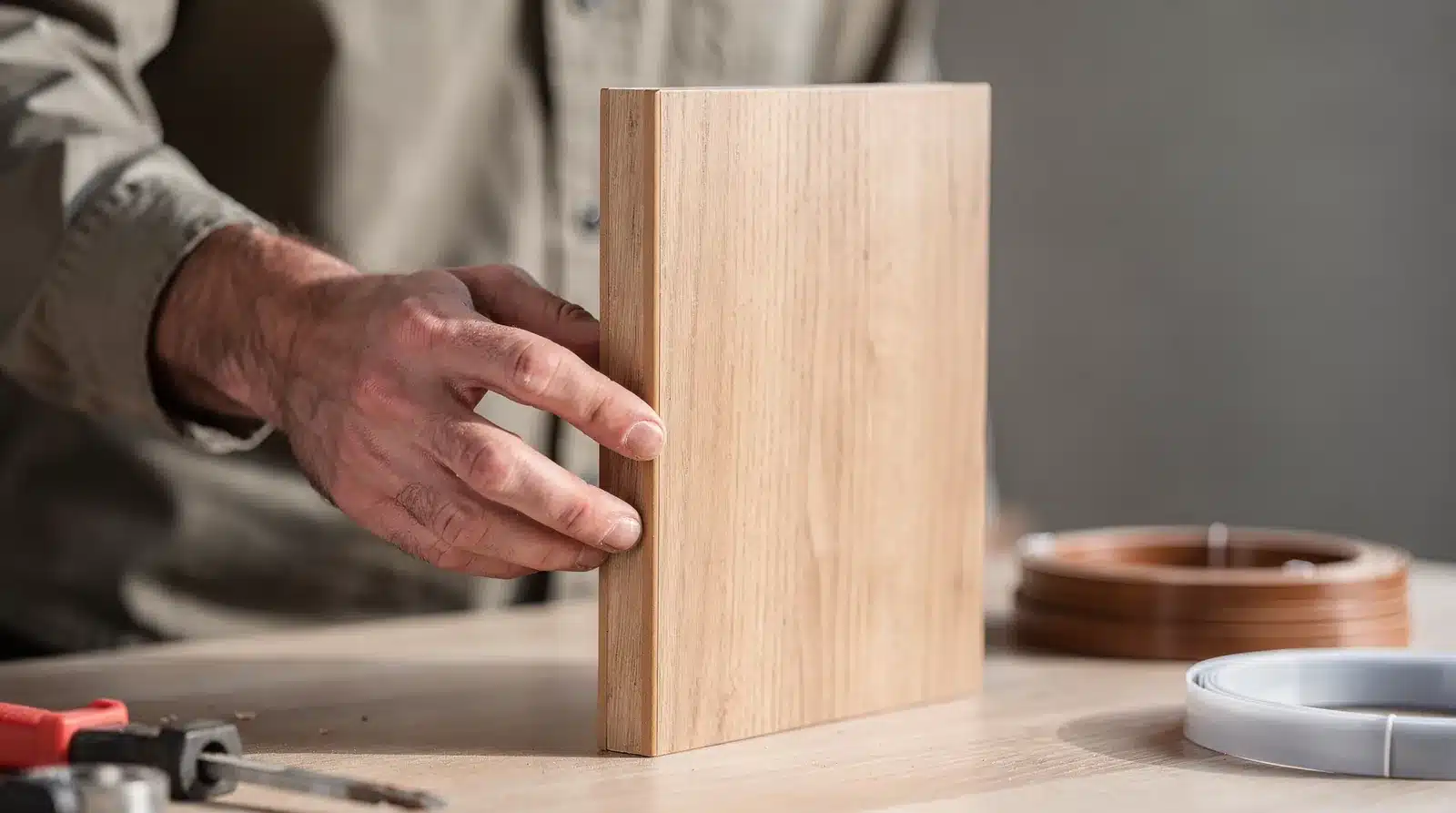
Real wood edgeband delivers authentic grain patterns and a tactile warmth that PVC cannot replicate. The fundamental distinction lies in material composition and finishing capability.
Wood edgebanding consists of thin slices of genuine hardwood veneer. PVC edgebanding is a thermoplastic polymer. Each material serves different aesthetic and functional requirements in architectural millwork and custom cabinetry.
Trumatch International Inc. offers a variety of wood finishes, including natural, stained, and lacquered options. This finishing flexibility represents a critical advantage for fabricators matching edge treatments to face materials.
Can real wood edgebanding be stained or painted?
Certain types of edgebanding, especially those made from real wood veneer, accept paint or stain. PVC edgebanding resists these treatments. A fabricator applying a custom stain to maple cabinetry achieves a seamless edge transition only with natural edgebanding that absorbs the same finish chemistry.
What materials compete with wood veneer edgebanding?
Common materials for edgebanding include PVC, melamine, wood veneer, and acrylic. Each option offers different aesthetic and functional properties. PVC provides moisture resistance and uniform color consistency. Wood veneer supplies authentic grain variation and refinishing potential that synthetic alternatives lack.
The choice between these materials shapes both the visual outcome and the long-term serviceability of the finished piece. Millwork shops specifying real wood edgeband gain the ability to sand, stain, and refinish edges throughout the product lifecycle. PVC edges cannot be altered after application.
How do you match grain for an uninterrupted transition?
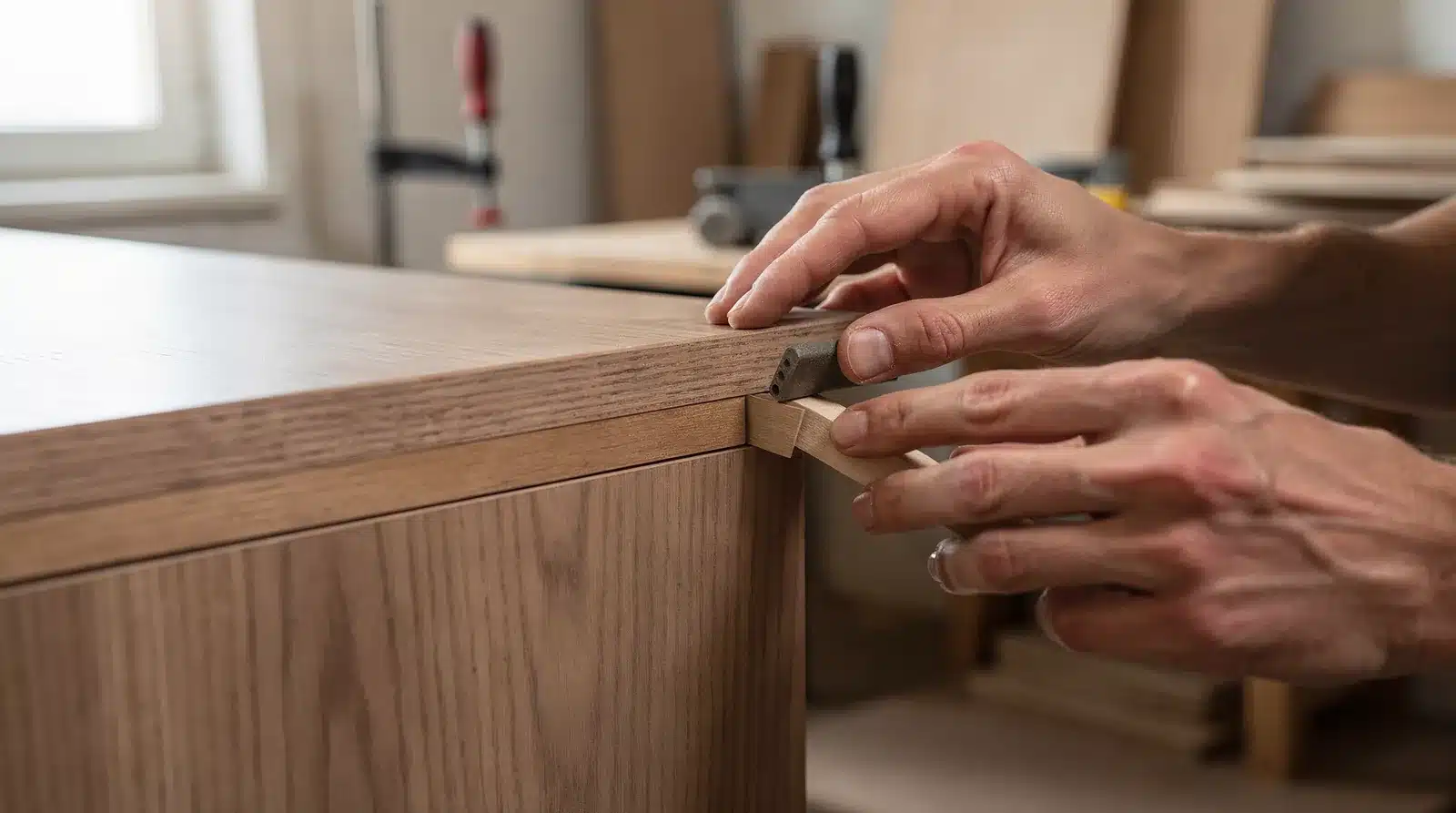
Achieving a seamless grain transition requires a specific fabrication sequence. The edgebanding is applied first, and then the face veneer is laid over both the substrate and the banded edge. This method, known as sequence-matched veneering, conceals the joint line completely.
Without this sequence, the transition between the plywood face and a solid wood edgebanding strip remains visible. The joint telegraphs through the finish, disrupting the visual flow. Fabricators lose the monolithic appearance that high-end architectural millwork demands.
What is sequence-matched veneering?
Sequence-matched veneering uses consecutive leaves from the same flitch. The leaves are applied in order, creating a continuous grain pattern across the entire surface. A discussion on LumberJocks confirms this technique: the edgebanding goes on first, and the veneer covers it afterward. The result is a surface where the real wood edgeband disappears into the overall design.
Why does application order matter for a seamless finish?
Order determines whether the edge reads as a separate component or part of the whole. Applying the face veneer last wraps the grain over the edge. The eye follows the uninterrupted figure across the corner. Trumatch offers architectural-grade wood veneers and edgebanding that support this precise layering. The company’s quality control includes strict inspection and testing at every manufacturing stage, ensuring the veneer leaves match consistently.
Fabricators who reverse the process, applying edgebanding after the face veneer, introduce a visible seam. That seam catches the light and finishes differently. The project loses the premium, furniture-grade look that clients expect. For precise trimming after application, the right tools make a critical difference. Explore edgebanding trimming tools designed for clean, flush results. Natural edgebanding demands this level of attention to sequence and tooling for a truly uninterrupted transition.
Which application method delivers the smoothest result?
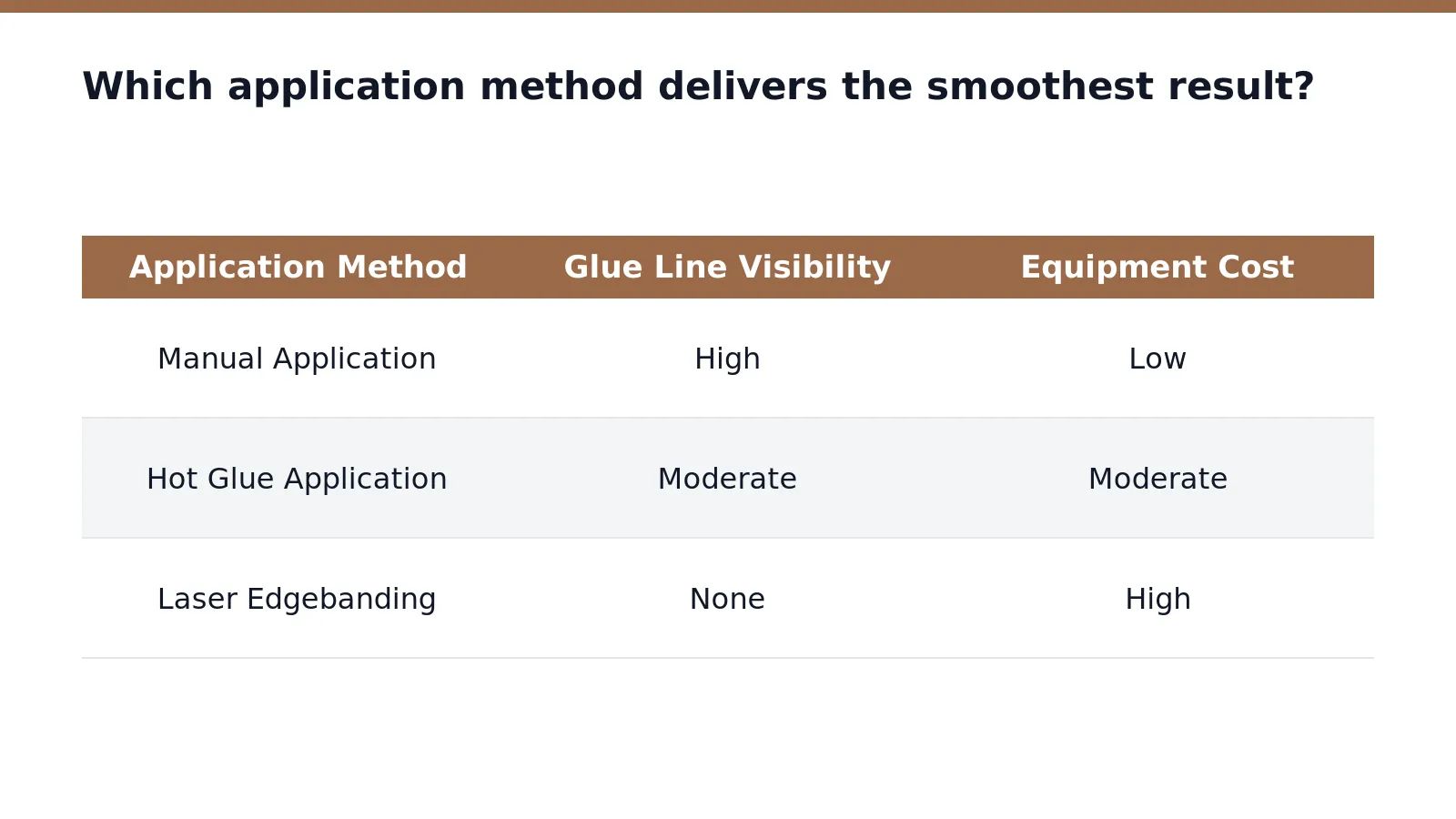
Laser edgebanding produces the smoothest, most invisible seam in architectural millwork. The process fuses a pre-applied polymer layer directly to the panel substrate, eliminating the glue line that creates visible transitions.
Trumatch International Inc. offers PVC, Veneer & Melamine edgebanding solutions. Each method demands different equipment and skill levels, and the final edge quality varies significantly between them.
Application Method | Glue Line Visibility | Equipment Cost | Skill Level |
|---|---|---|---|
Manual Application | High | Low | High |
Hot Glue Application | Moderate | Moderate | Moderate |
Laser Edgebanding | None | High | Low |
Manual application relies on operator precision. Hot glue systems speed up production but leave a thin adhesive layer between the wood edgebanding and the panel. That layer catches light differently than the surrounding surface. Laser technology removes this variable entirely. The absence of a glue line means the real wood edgeband reads as continuous grain from face to edge, a critical requirement for high-end cabinetry and millwork where clients inspect joints at close range.
How does edgebanding thickness affect seam quality?
Thickness plays a supporting role in the final result. Edgebanding typically ranges from 0.4 mm to 3 mm, depending on the substrate and application. Thinner bands conform more easily to substrate irregularities. Thicker natural edgebanding provides more material for radius edges and sanding. Neither thickness compensates for a poor bond. The application method determines bond quality, and bond quality determines whether the seam disappears or remains visible.
What role does trimming play in a smooth finish?
Trimming is the finishing-stage process that removes excess banding and refines panel edges. Even a perfectly applied band leaves a rough transition if trimming is rushed or imprecise. Proper trimming produces clean, durable cabinetry and millwork edges that feel flush to the touch. For shops transitioning from hot glue to laser systems, mastering PVC edgebanding techniques builds the foundational trimming discipline that laser applications reward with flawless results.
Where can fabricators source quality wood edgebanding?
Fabricators find reliable wood edgebanding through specialized suppliers who stock architectural-grade materials. Trumatch International Inc., located in Whitby, ON, CA, supplies real wood edgeband products to millwork firms and cabinetry manufacturers across North America. The company maintains a focused inventory of veneer edgebanding, PVC edgebanding, and tambour panels for professional applications.
What lead times should fabricators expect for edgebanding orders?
Standard wood veneer and edgebanding orders from Trumatch International Inc. carry a typical lead time of 2 to 4 weeks. This window allows the company to process, prepare, and ship materials without compromising quality control. Fabricators planning project timelines should factor this lead time into their procurement schedules. Rush requirements warrant direct communication with the purchasing team.
How does sustainable sourcing affect edgebanding quality?
Trumatch International Inc. commits to sourcing all wood products from sustainable and responsibly managed forests. This commitment ensures that natural edgebanding materials meet both environmental standards and the performance demands of architectural millwork. Responsible forestry practices yield consistent grain patterns and stable substrate material. The result is edgebanding that bonds reliably and finishes evenly.
Conclusion
A seamless natural wood edgebanding finish depends on sequence-matched veneering, laser application, and precise trimming. Fabricators who prioritize these methods deliver the monolithic appearance that high-end architectural millwork demands. Evaluate current application processes against these standards, and source architectural-grade materials that support consistent grain matching and reliable bonding. The next project presents the opportunity to eliminate visible seams and achieve the furniture-grade result clients expect.
Fabricators serving the Toronto market benefit from localized supply through Trumatch’s regional edgebanding services. Direct inquiries about species availability, thickness options, and bulk pricing reach the company at purchasing@trumatch.ca. A dedicated support team assists with technical specifications and order configuration.
Key Takeaways
-
Matching species, grain, and color between veneer and panel face achieves a seamless natural wood edgebanding finish
-
Real wood edgeband protects exposed substrate from moisture and physical damage while delivering an authentic wood appearance
-
Sequence-matched veneering applies edgebanding first, then lays face veneer over the substrate and banded edge to conceal the joint
-
Trumatch offers architectural-grade wood veneer edgebanding in thicknesses from 0.4 mm to 3 mm for sanding and finishing
Frequently Asked Questions (FAQs)
Q. How does Trumatch ensure a seamless finish with natural wood edgebanding?
A. Trumatch offers architectural-grade wood veneer edgebanding in thicknesses from 0.4 mm to 3 mm, allowing fabricators to sand and finish the joint for an invisible transition.
Q. What makes real wood edgeband different from synthetic alternatives?
A. Real wood edgeband carries the same grain character and light-reflecting properties as the face veneer, while synthetic options approximate color but lack depth.
Q. How does edgebanding protect against moisture damage?
A. Trumatch International Inc. confirms that edgebanding protects exposed edges from damage and moisture, sealing the entry point to prevent core swelling in high-humidity environments.